In its first edition, AKI AORA invited artists and speakers to participate, the invited artists were John Arnold (EU), Blake Shaw (EU), Paloma Contreras Lomas (MEX, Bikini Wax), Jacob Kirkegaard (DK), Sally Montes (MEX), Baby Vulture (MEX) and as the invited guest speaker, Robin Kahn (EU). The live performances were by Baby Vulture (MEX), Superpoze (FR), and Damian Romero (MX).
In 2018, Tulum was ecologically singular, culturally layered, and alive with the kind of contradictions that make for urgent and compelling art. For its second edition, AKI AORA continued to ask how site-specific research-based practice might respond to the social and environmental realities of the territory in real time. The residency has operated as a laboratory: artists are invited not to present existing work but to allow new practice to emerge from sustained engagement with the place, its histories and its contradictions. The result was an edition that refused easy positions, holding utopia and dystopia in tension as two faces of the same reality.
Months before the residency opened, Kaitlyn Aurelia Smith performed in a kickoff event that set the tone for the edition — her layered, organic electronic compositions a kind of overture to the questions that would follow.
The residency brought together artists whose practices, though distinct, were united by a shared attentiveness to systems — ecological, political, cultural, sonic — and to the ways in which those systems break down, mutate and persist. Hendrik Weber, known as Pantha du Prince, developed The Orchestra of Forgotten Skills in collaboration with the children of La Esquina Foundation, guiding them to build their own instruments from scratch before performing together alongside Weber and his bells — a fleeting, unrepeatable ensemble conjured entirely from the encounter between artist, community and place.
Interspecifics (Leslie Garcia, Paloma López, MEX) developed Species Resiliens through an immersive investigation into the intersections of biology, sound and machine intelligence — probing the communicative and adaptive capacities of living systems, and asking what forms of intelligence, relation and coexistence remain illegible to the human sensorium.
Mario García Torres (MEX) traced a somewhat esoteric cultural history of rivers in Five Feet High and Rising — a work that charted and merged different stories of movement, migration and fragmentation, drifting through a combination of images and music that made reference to small and large waterways alike. In a personal narrative that disrupted and traversed chronological time, García Torres directed the overflows of these disparate rivers together into a performed new narrative, finding in the flow of water a metaphor for the flows — of people, capital, culture — that define Tulum today and beyond.
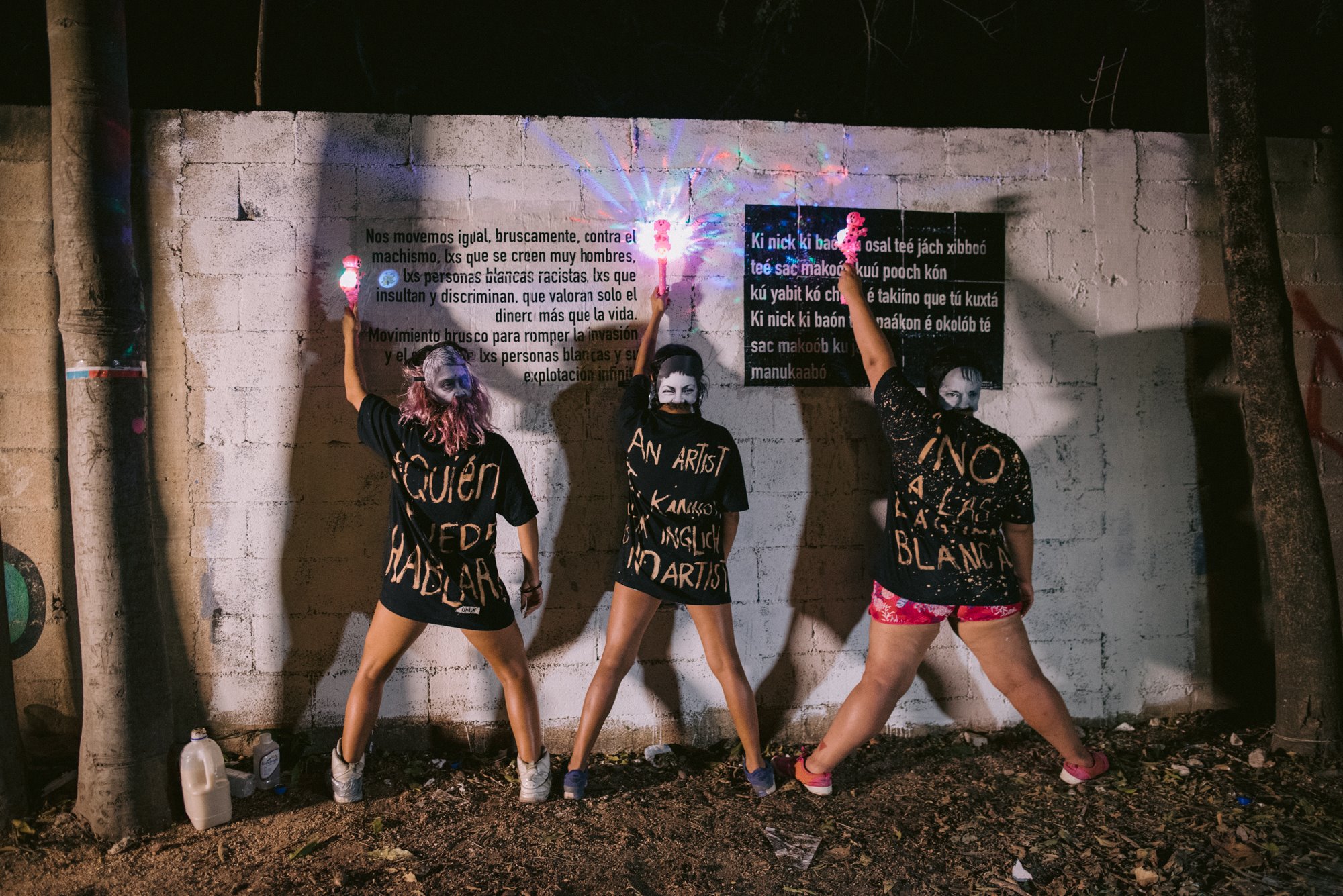
Invasorix (MEX) developed Perreadoras Aguafiestas on site — their feminist reggaeton and collective performance practice a refusal of the sanitised, aspirational image of the region, insisting on the bodies, voices and politics that that image works hardest to erase.
Wendy Cabrera Rubio and Josué Mejía (MEX) turned their research towards Xcaret and the mechanics of cultural spectacle, collaborating with Guadalupe, a local art teacher and expert in pre-Hispanic replicas, to develop Apocalipto: El Estilo Maya Aplicado a las Artes Auxiliares. Presented at the Casa de la Cultura in Tulum, the work applied Mayan aesthetics to the auxiliary arts with sharp irreverence — a layered commentary on cultural appropriation, the spectacularisation of indigenous heritage and the tourism industry's appetite for a pre-packaged past.
Ahmet Öğüt (TUR) developed The Missing T — a single channel video work that emerged from his close observation of the social and political life of Tulum's community: the abandoned sign bearing the town's name, and the recently fired policemen who had protested for forty-five days demanding basic rights — officers required to purchase their own uniforms, equipment, healthcare and even accommodation during training. A work about what a place costs those who are made invisible by its reinvention.
Taus Makhacheva (RUS) developed And Then, Mexico Happened in collaboration with chef José Luis Hinostroza但 — a dessert inspired by the porous limestone rock of the Yucatan region, crafted to look like rocks but made of soft meringue filled with huitlacoche, shared with the audience during her presentation. A work that dissolved the boundaries between art, territory, taste and encounter.
Rogelio Sosa (MEX) developed Paradise Lost during his residency — a performance drawing on John Milton's epic poem as a departure point, performed live alongside local actors from Tulum's service industry.
The public programme extended the residency's questions into open dialogue. Paul Miller aka DJ Spooky spoke about his recent research in Antarctica, exploring sound, ice and the aesthetics of climate emergency. Mariana David reflected on her curatorial practice. And curator Nika Chilewich shared her curatorial practice in Mexico City
The 2018 edition was curated by Sally Montes and Masha Isserlis.
Plastic sandals washed ashore. Mangroves cleared for boutique hotels. The language of wellness co-opted to sell what it quietly destroys. For its 2019 edition, Aki Aora invited artists to work in the space between these contradictions — bringing guerrilla tactics and an Anthropocene lens to bear on the slow, invisible violence that accompanies promises of progress, growth and "eco chic" well-being, while the region's biodiversity continues to unravel.
Returning members of the Invasorix collective (MEX) — Liz Misterio, Unx and Nabil Yanai — deepened their research from the previous year, creating feminist reggaeton and facial masks as a form of social treatment: White Noise and Bring Back the Gold, the latter referencing the Spanish plundering of Mayan gold during the colonial era. Conscious of their position as outsiders, the collective directed their critique inward as much as outward.
Sebastián Terrones (MEX) presented a lecture-performance and dining experience in collaboration with Las Veracruzanas, a food stall in Tulum's central market frequented by residents and tourists alike. As the audience ate, he drew parallels between Columbus's aestheticised construction of "paradise" and the contemporary rhetoric of Tulum's tourist industry — arguing that the promise of "eco chic" represents little more than a second wave of colonialism.
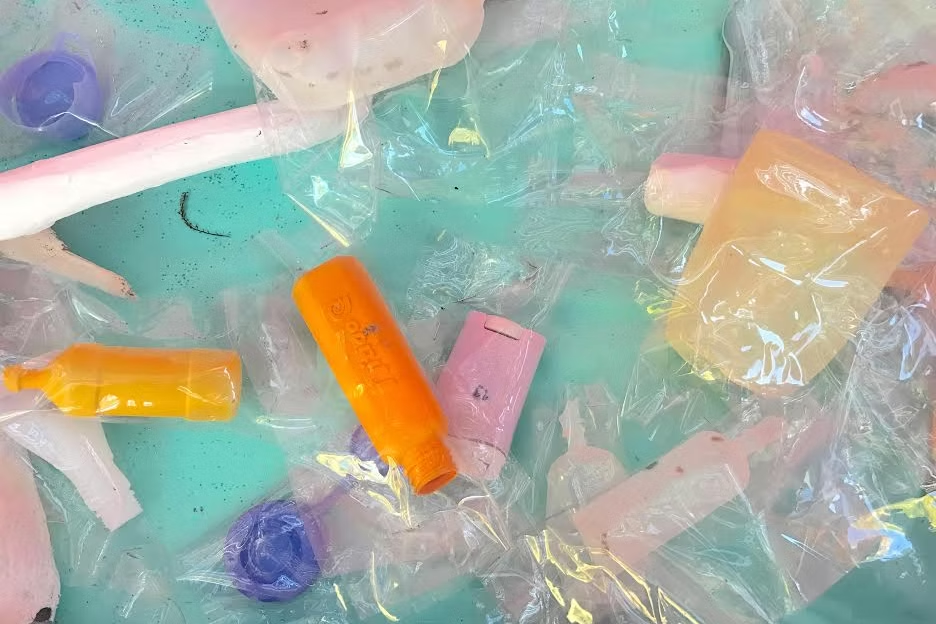
Fallen Fruit (USA) extended their Endless Orchard project — Huerto Sin Fin — planting over thirty-five fruit trees in public spaces across Tulum town and Francisco Uh May, adopted and cared for by local residents. Working with children from the La Esquina Foundation, they created plastic spirit bug catchers from recycled bottles to protect the new trees, weaving together themes of recycling, community stewardship and the threat of cultural tourism.
The public programme brought together an exceptional group of speakers and performers. Ana Gabriela García (Terremoto Magazine, MEX) addressed how artistic agents can work with and subvert the colonial gaze. Alyssa Nitchun (Creative Time, USA) presented Attack of the 50 Foot Monuments. Scientist S. Beckett Gookin (USA) presented on biomimicry and the arts, tracing the ways nature's own design logic might reorient our relationship to the ecosystems we are dismantling. And at Tutti Frutti bar, Benjamin Lee Ritchie Handler (USA) took the stage as his alter ego Olivia Neutron Bomb for Trans World — a conference on the multiverse as rigorous as it was outrageous.
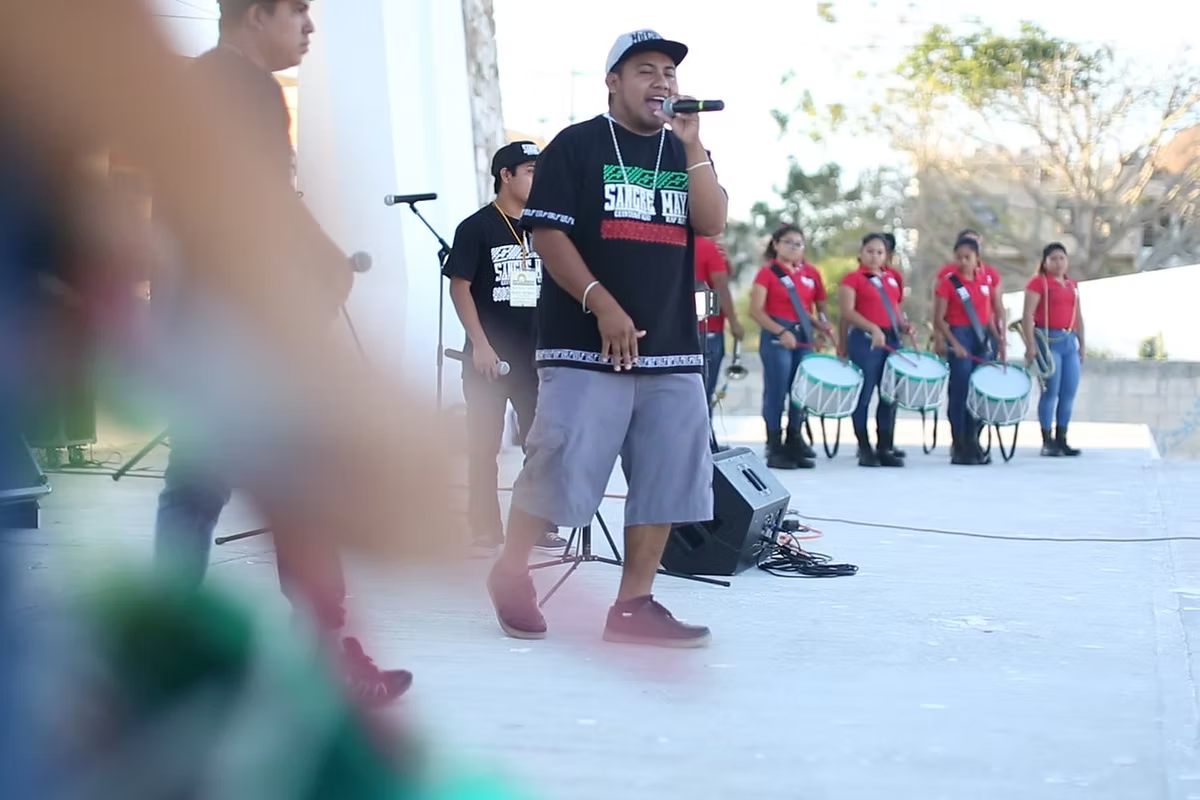
Beyond the residency programme, the 2019 edition opened outward into the town itself. Behind the municipality in downtown Tulum, ADN Maya brought indigenous performance to the streets, alongside Linces de Tulum, a local student band, in an electrifying evening that grounded the festival in the living culture of the region. Composer and performer Rogelio Sosa presented a live performance alongside Paradise Lost, his video art work produced during the Aki Aora 2018 residency.
The 2019 edition was curated by artist Sally Montes and London-based guest curator Sasha Galitzine.
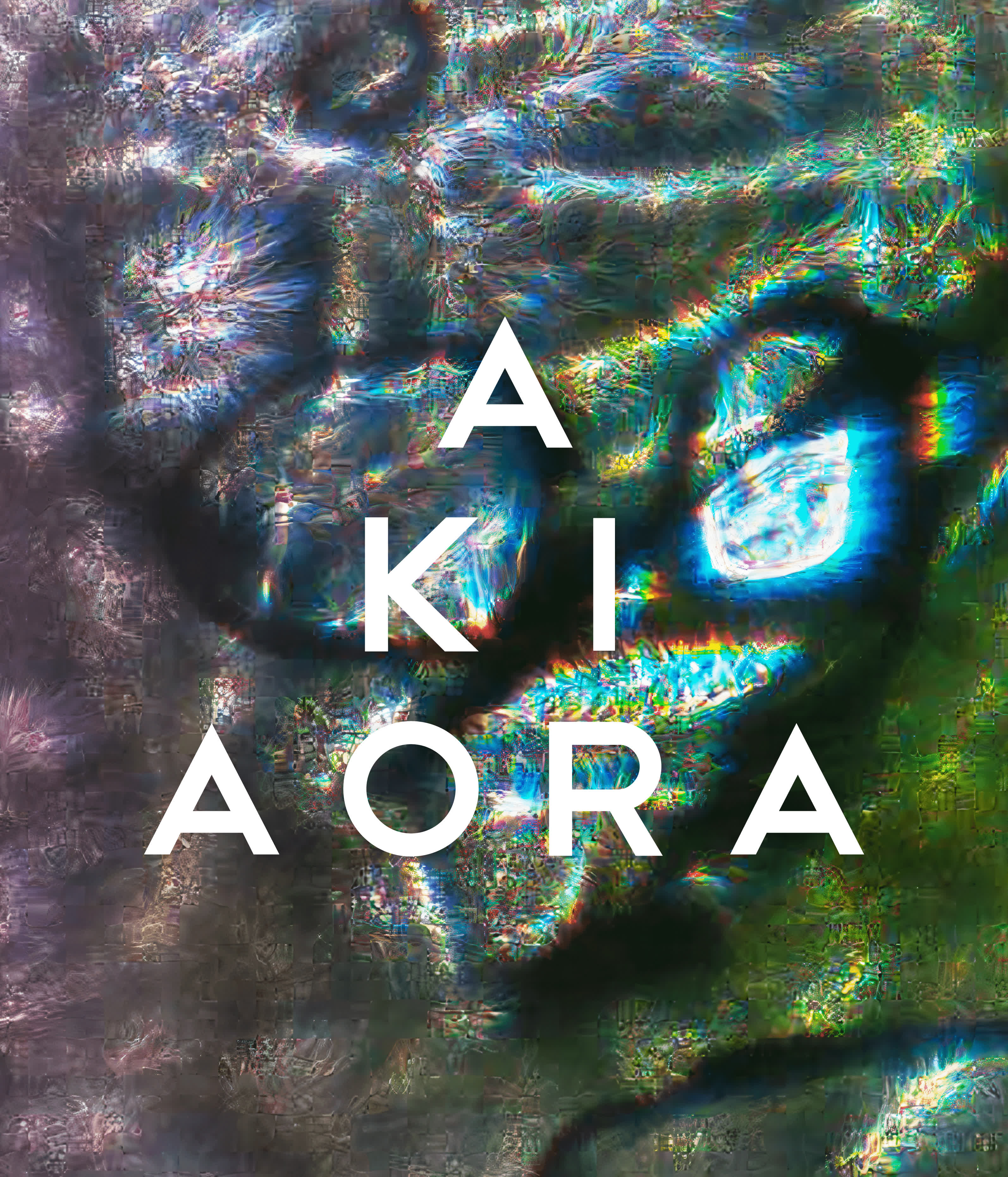
AKI AORA's 2023 edition was born from a simple need — to create a space for wellbeing, reflection and dialogue in the aftermath of the pandemic. From Socrates, Plato and Aristotle, who understood nature, movement and dialogue as inseparable from the life of the mind, to Félix Guattari's understanding of ecology as a practice of relation — between minds, bodies, territories and the living world that holds them — the most generative thinking has always found its way into the open air — into nature, into the body, into being together.
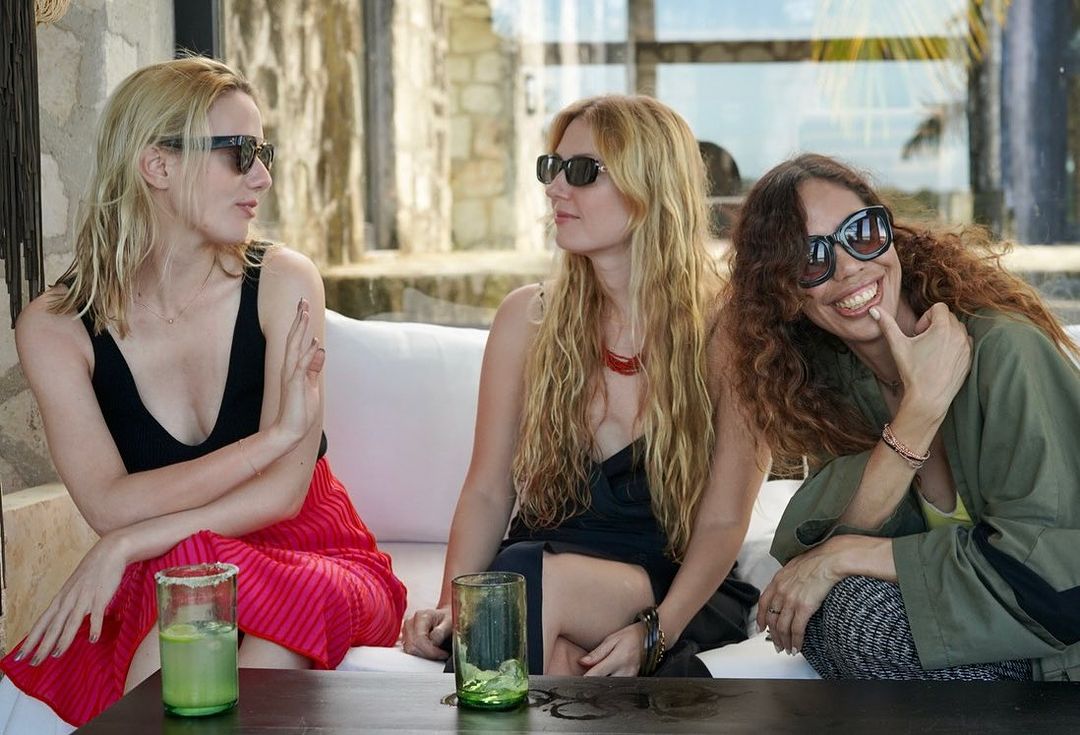
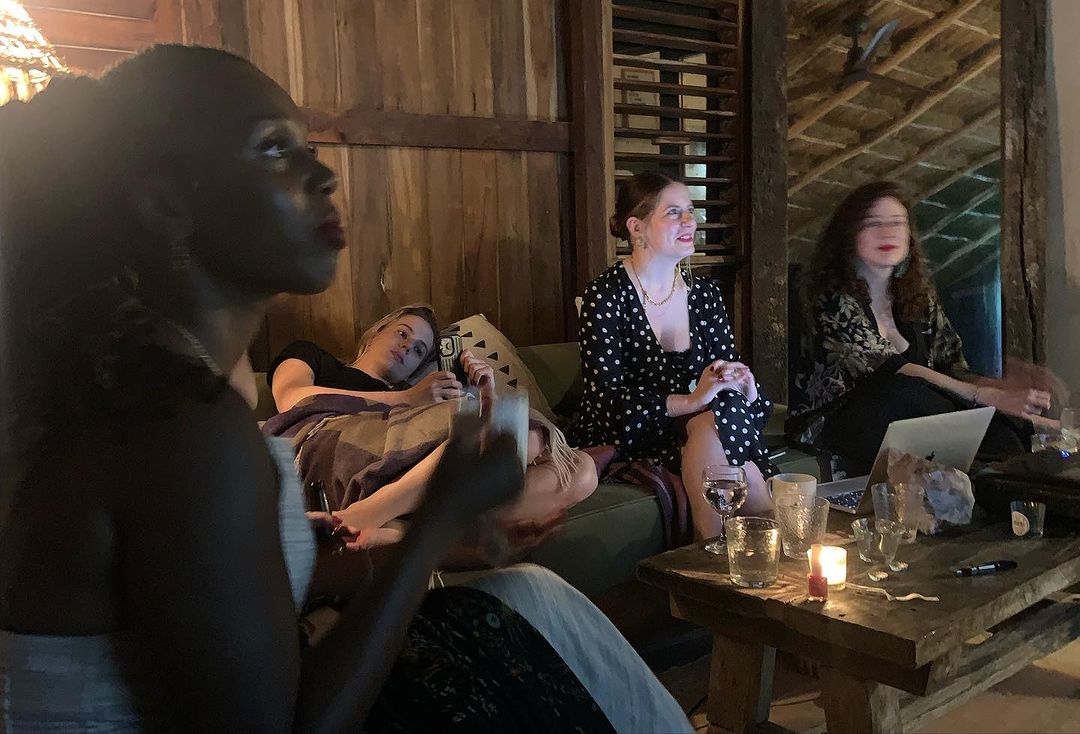
It was in this spirit that a small group of practitioners gathered at Rancho Sarah, within the Sian Ka'an Biosphere Reserve. Nothing was asked of the participants. No production was expected. This was something rarer and more personal — a space to get to know one another beyond the brief encounters that art openings allow, to meet each other more fully, outside the roles and contexts we usually inhabit.
The group brought together a range of practices and perspectives. Mirelva Bergahaut is a curator of photography and image-based art, with a focus on popular culture, representation and decolonisation, based in Amsterdam. Charlotte Knaup is a curator at the Hamburger Bahnhof – Nationalgalerie der Gegenwart in Berlin, whose practice seeks to blur the lines between different creative disciplines and foster multifaceted conversations between art and its audiences. Leah Turner is a gallerist at Esther Schipper, Berlin. Noemí Ontiveros is director of Lago Algo, Mexico. Masha Isserlis is a curator and art historian based between Berlin, co-founder of A:D:Curatorial, with a long-standing commitment to Ukrainian culture and its place within European art history. Masha Reva is a multidisciplinary artist from Kyiv, Ukraine, working contemporary art, craft, body art and performance, known for her distinctive line-based drawings across surfaces from murals and textiles to ceramics and the human body. Sally Montes, AKI AORA's founder and curator, works with the abstraction of material and immaterial data as an agent for social change, with a particular interest in disappearing languages and new ways of circulating information.
Shared daily life by the ocean — conversations and long walks along the coast, cooking together, practicing qigong, learning about agriculture and the rhythms of the land — became the framework within which something less easily defined took shape. The Sian Ka'an Biosphere Reserve — one of the most biodiverse ecosystems on earth — was not a backdrop but a condition, quietly shaping the quality of attention and the texture of conversation. What emerged was a quality of presence rarely afforded by professional life — a deeper understanding of one another, and the kind of mutual support that can only grow from shared time, shared meals and shared silence.
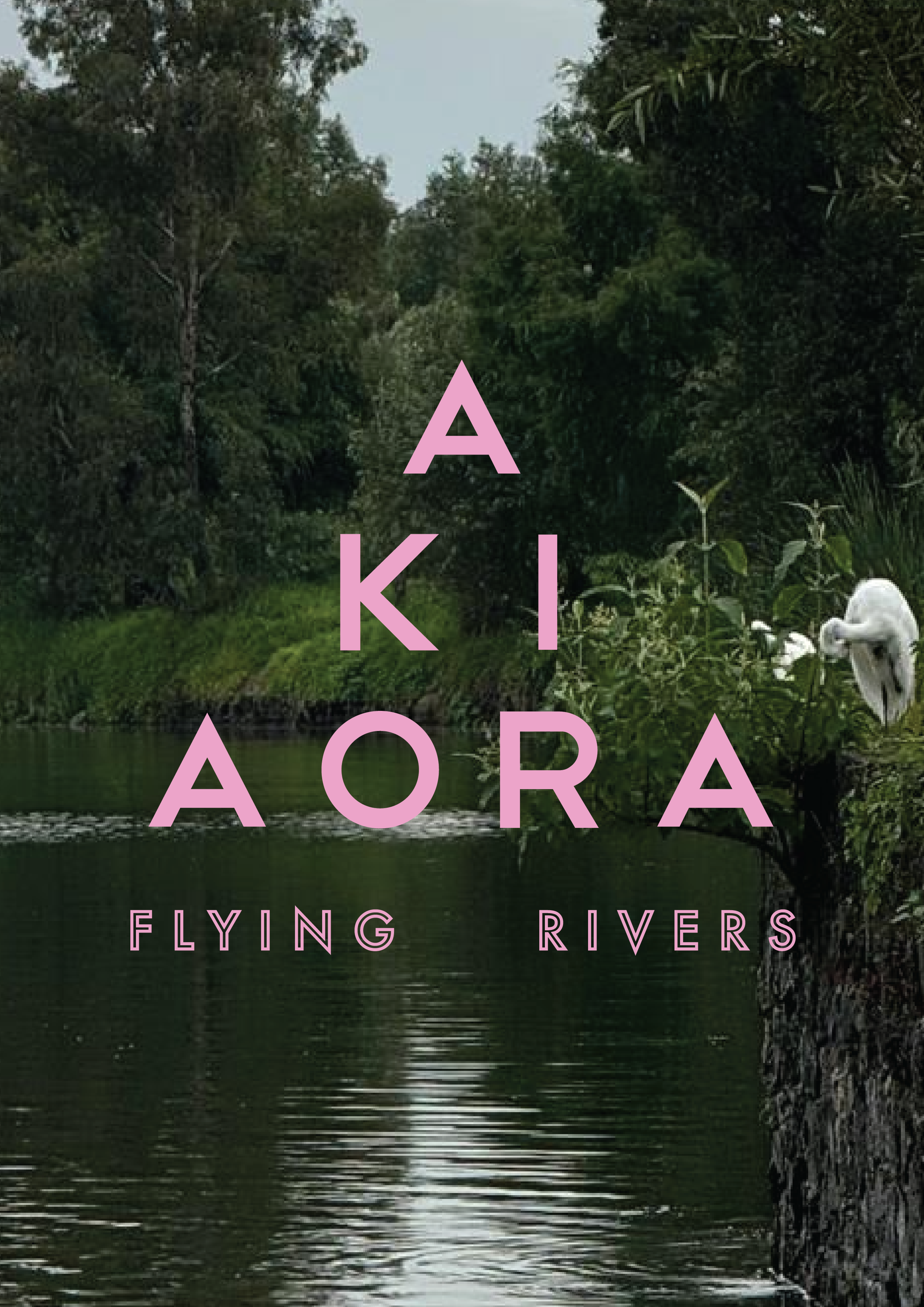
This program explores the notion of flying rivers, both in their environmental impact and their power as a cultural metaphor: a network of invisible connections that, like these natural flows, links territories and allows the ecosystem to flourish. These flying rivers cross borders unseen, weaving a web that connects ecosystems and communities beyond any geographical boundary. Inspired by this phenomenon in the Amazon, where moisture from the forest becomes aerial currents that transport nutrients and water to other regions, the Flying Rivers program offers a series of art exhibitions, educational workshops and community activities that explore the intersection between art and ecology. These activities promote awareness of natural resource conservation, sustainability and an inclusive dialogue that invites all participants and visitors to reflect on these issues.
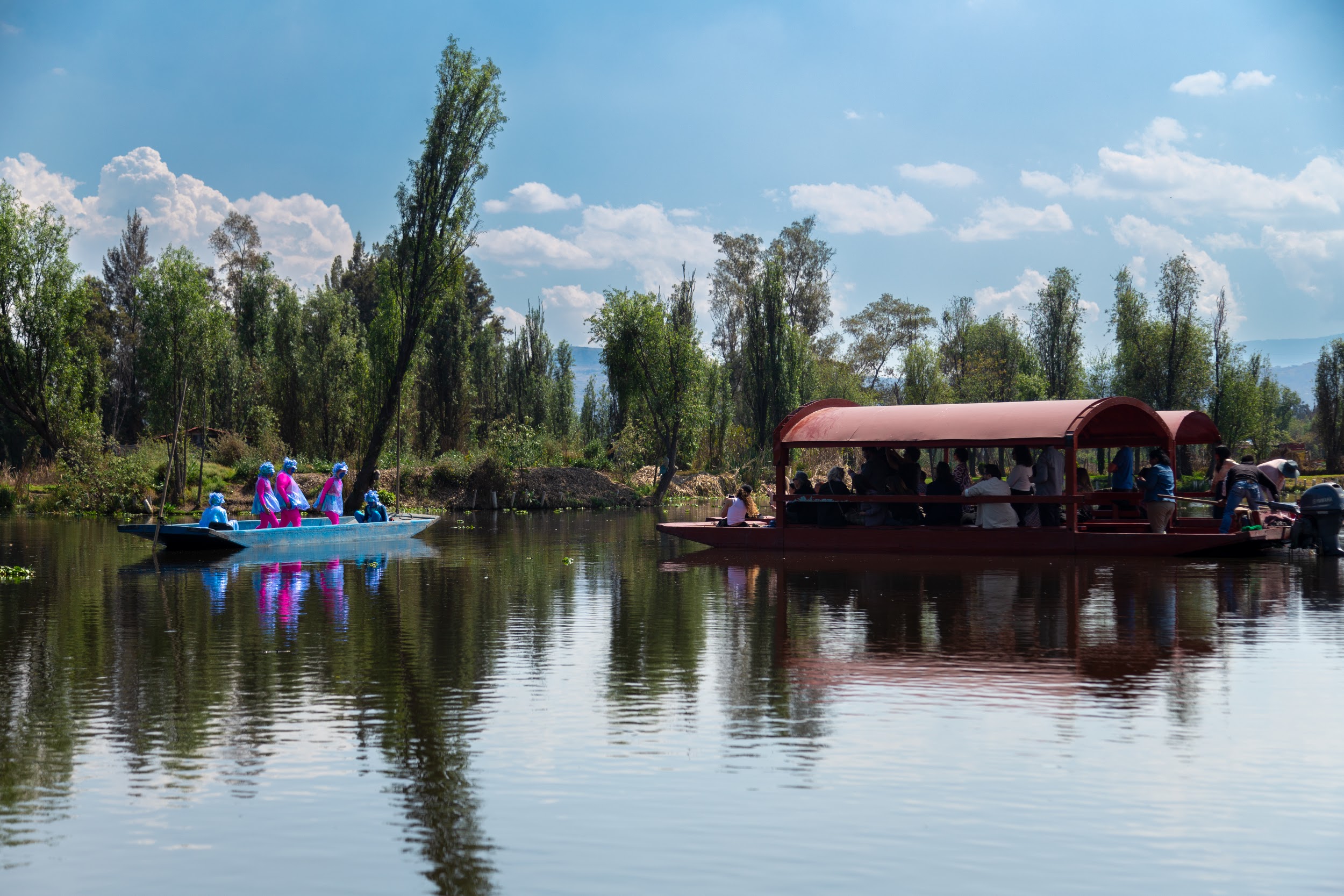
The AKI AORA 2024-2025 artist residency in Xochimilco is conceived as a space where art flows like flying rivers: unfolding invisible networks of exchange and mutual support. From March 2024 to February 2025, AKI AORA will invite artists in residence to immerse themselves in the concept of flying rivers as a bridge connecting the historical and the contemporary, the south and the north, the individual and the collective. Through this residency, artists will collaborate with local communities to explore how art can serve as a tool for visibility and change, in a series of exhibition stations located within the canals and chinampas of Xochimilco, generating an experience in motion.
This multidisciplinary approach integrates artists, curators, academics, scientists and community leaders, who will address contemporary challenges and build visions of a shared future. The resulting works will be presented in February 2025 in a series of art exhibitions that will reflect learning and exchange, materializing the results of artistic research. Here, artists will collaborate with the community to make the invisible visible, through actions and dialogues that invite to imagine global utopias inspired by local resilience.



.avif)
.avif)
.avif)
.avif)