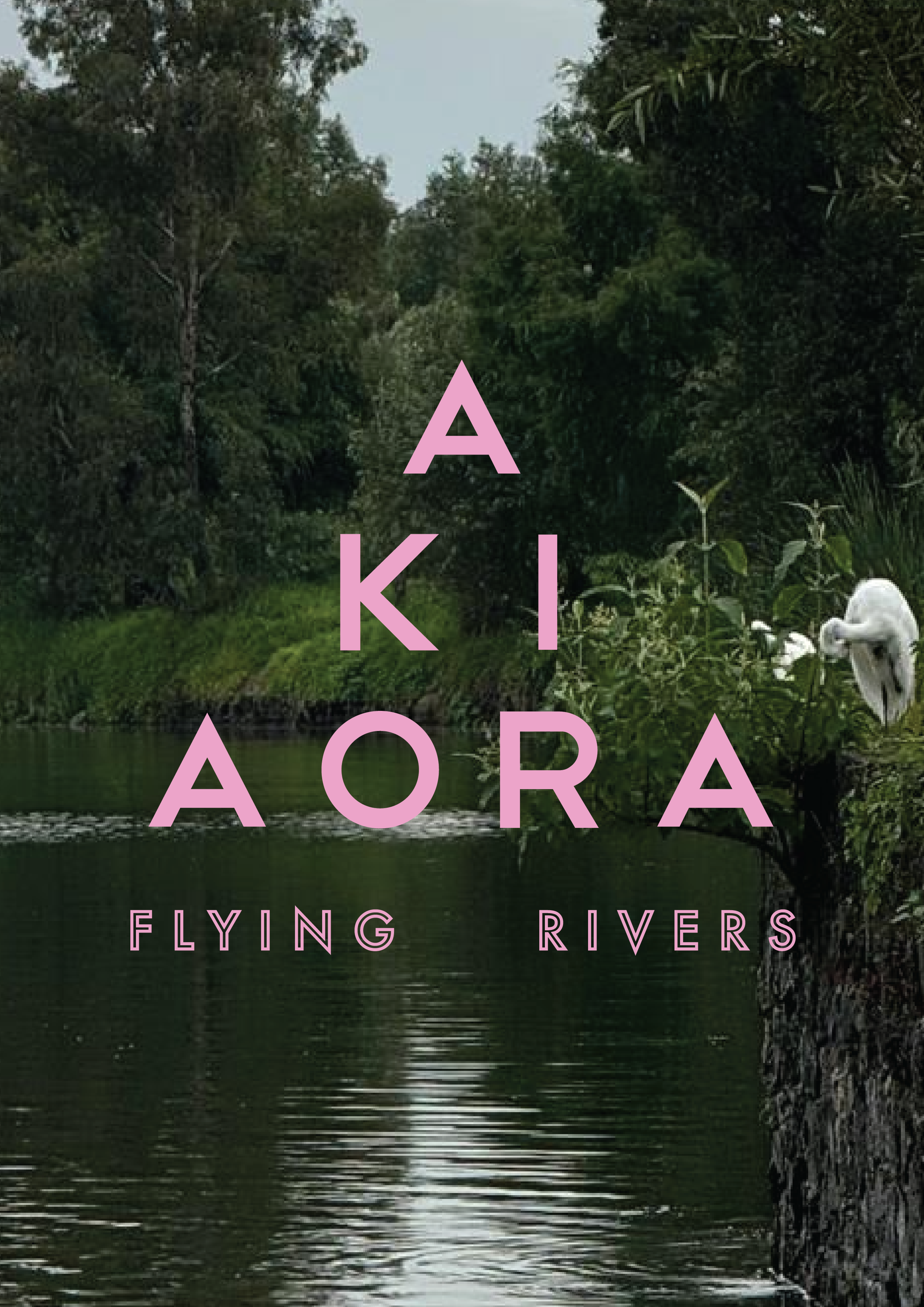
This program explores the notion of flying rivers, both in their environmental impact and their power as a cultural metaphor: a network of invisible connections that, like these natural flows, links territories and allows the ecosystem to flourish. These flying rivers cross borders unseen, weaving a web that connects ecosystems and communities beyond any geographical boundary. Inspired by this phenomenon in the Amazon, where moisture from the forest becomes aerial currents that transport nutrients and water to other regions, the Flying Rivers program offers a series of art exhibitions, educational workshops and community activities that explore the intersection between art and ecology. These activities promote awareness of natural resource conservation, sustainability and an inclusive dialogue that invites all participants and visitors to reflect on these issues.
The AKI AORA 2024-2025 artist residency in Xochimilco is conceived as a space where art flows like flying rivers: unfolding invisible networks of exchange and mutual support. From March 2024 to February 2025, AKI AORA will invite artists in residence to immerse themselves in the concept of flying rivers as a bridge connecting the historical and the contemporary, the south and the north, the individual and the collective. Through this residency, artists will collaborate with local communities to explore how art can serve as a tool for visibility and change, in a series of exhibition stations located within the canals and chinampas of Xochimilco, generating an experience in motion.
This multidisciplinary approach integrates artists, curators, academics, scientists and community leaders, who will address contemporary challenges and build visions of a shared future. The resulting works will be presented in February 2025 in a series of art exhibitions that will reflect learning and exchange, materializing the results of artistic research. Here, artists will collaborate with the community to make the invisible visible, through actions and dialogues that invite to imagine global utopias inspired by local resilience.
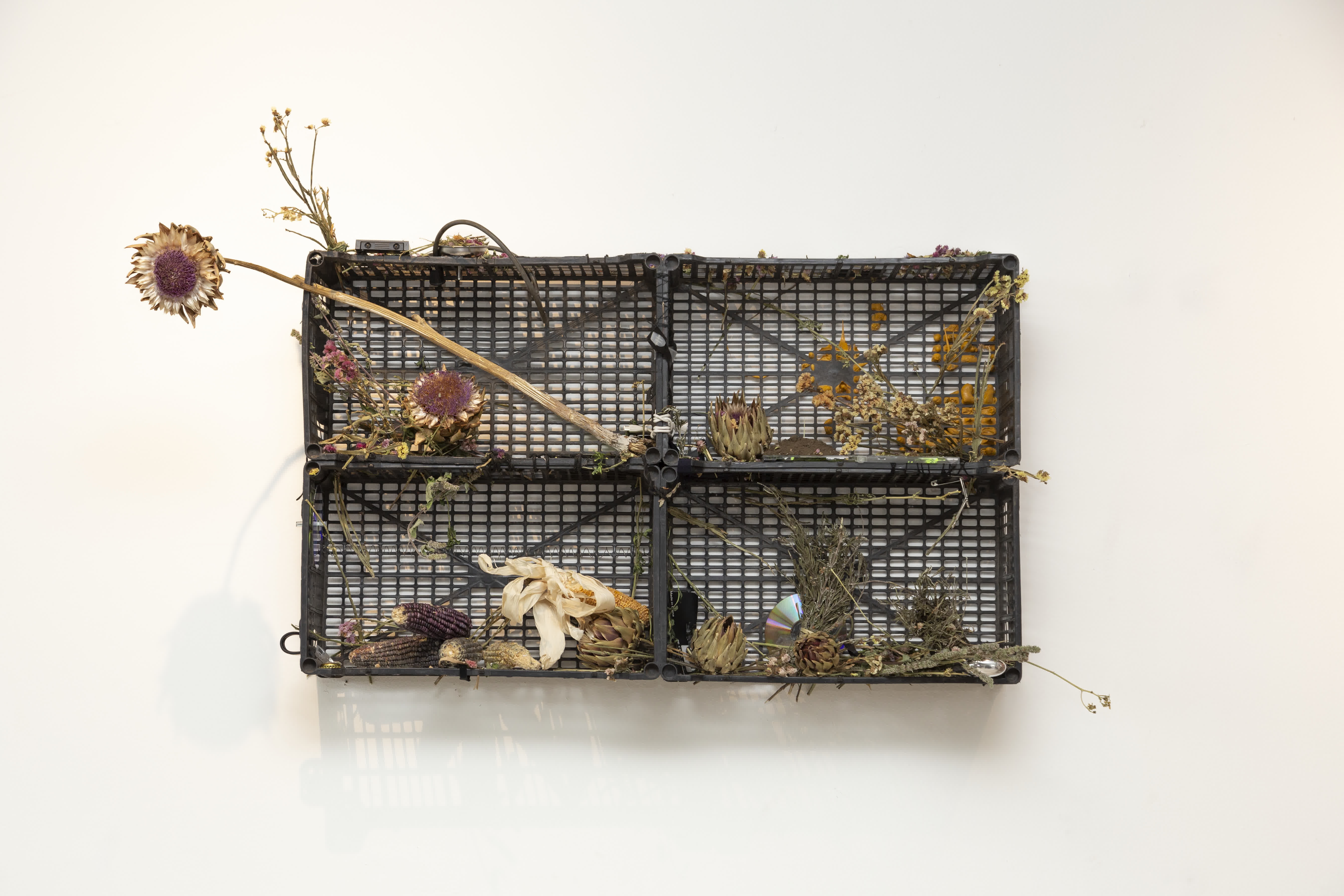
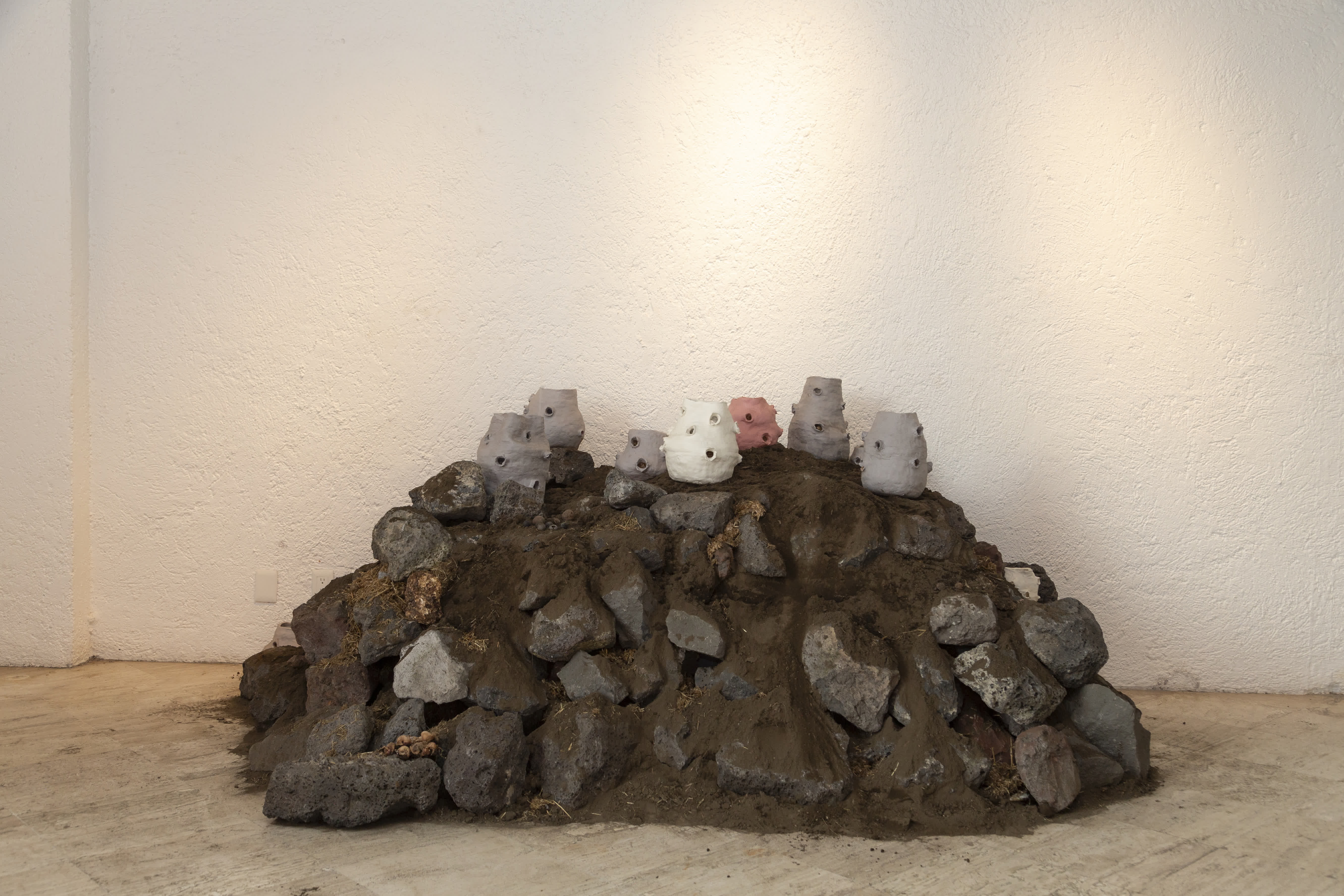
A native of Xochimilco, Víctor Federico Contreras created acollage-installation composed of everyday materials, collectedstories, and edible pigments. His piece reclaims the visual languageof community life—market stalls, flower boats, murals—and rendersit into a tactile memory map of the territory. Víctor frequentlyleads chinampera painting workshops using natural dyes fromXochimilco, inviting participants to eimagine the land as both canvasand archive. His collaboration grounds the residency in embodiedlocal knowledge.
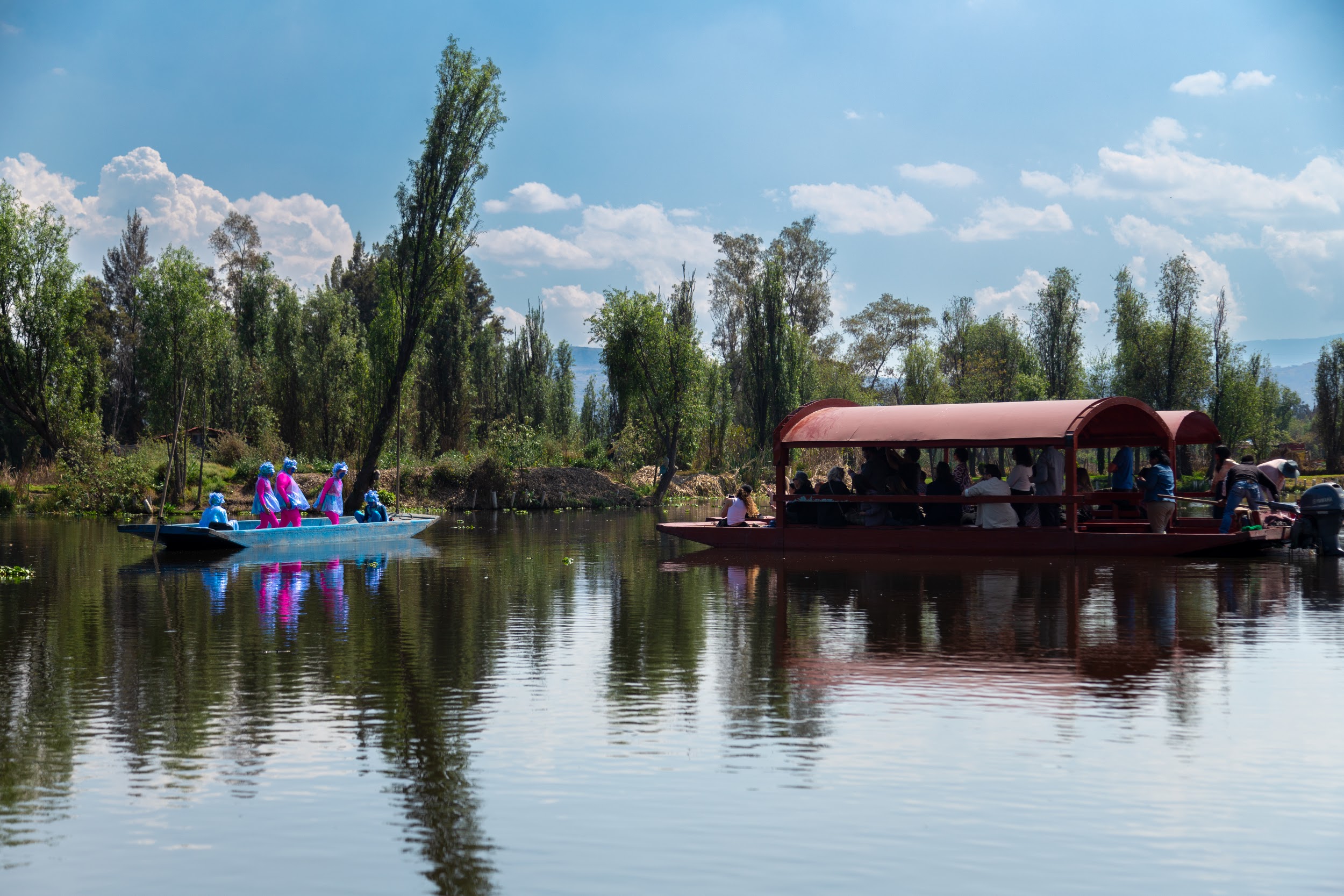
Staged on a chinampa as a compost ritual. Through performance andcollective presence, the group transformed the waters into aspeculative site of queer ecologies, care labor, and radicaltenderness. Their intervention proposed composting as a metaphor forboth decay and renewal—emotional, political, and planetary.
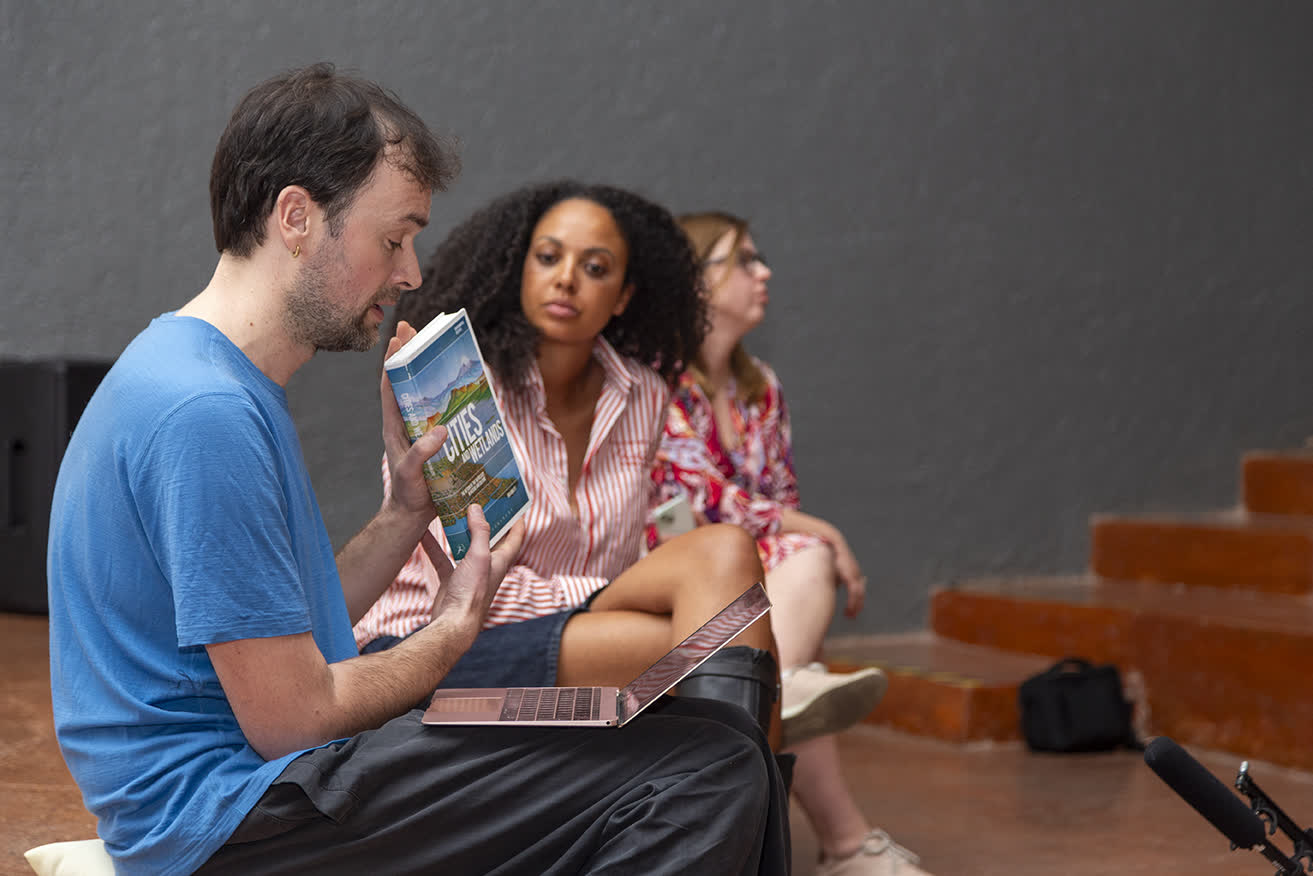
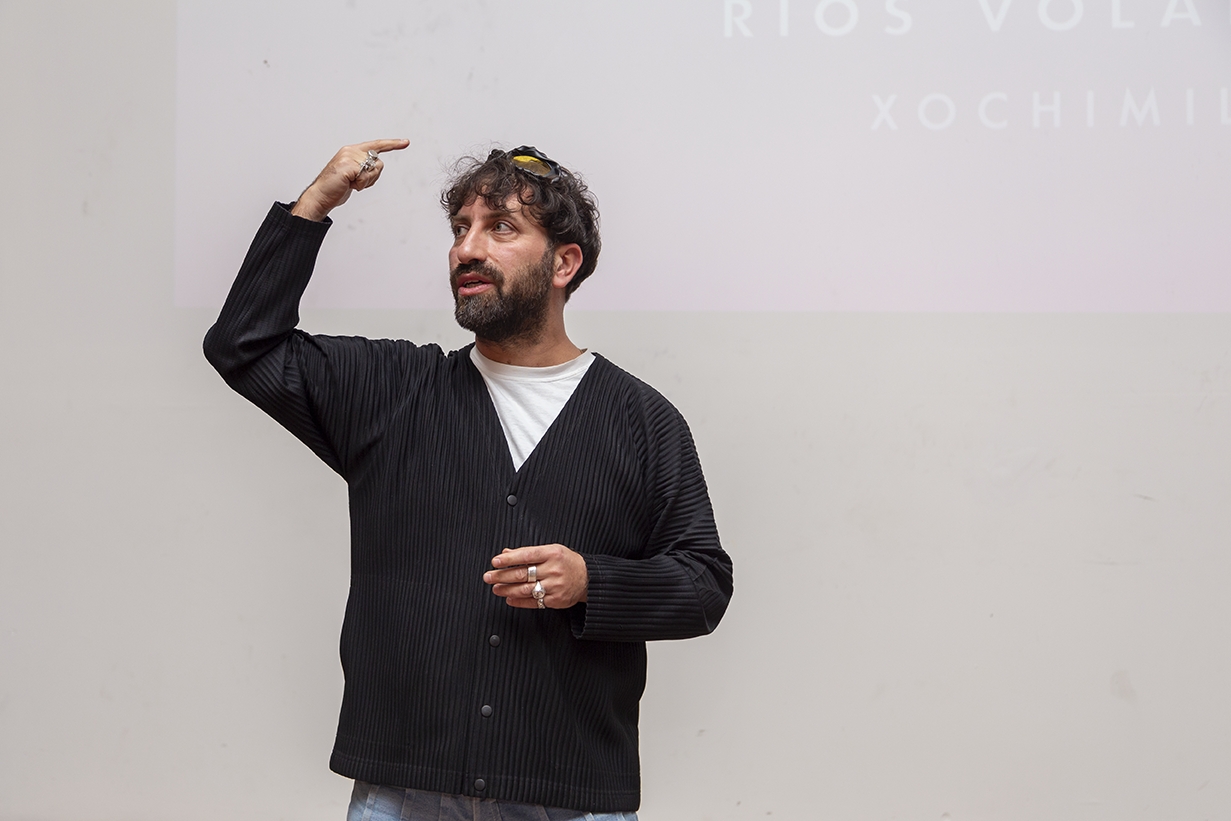
Rita Ouédraogo and Robbie Schweiger presented Life CompensationLottery, a research-based project addressing the ecological andsocial consequences of environmental degradation in Amsterdam’swetlands. At Ríos Voladores, they expanded their inquiry throughconversations and site visits in Xochimilco, drawing parallelsbetween water ecologies under threat and the mechanisms ofcompensation, responsibility, and justice. Their participatory talkopened a space for reflection on shared colonial legacies and thepossibility of reparative imagination through art.
Curabitur pretium tincidunt lacus. Nulla gravida orci a odio. Nullam varius, turpis et commodo pharetra, est eros bibendum elit, nec luctus magna felis sollicitudin mauris. Integer in mauris eu nibh euismod gravida. Duis ac tellus et risus vulputate vehicula. Donec lobortis risus a elit. Etiam tempor. Ut ullamcorper, ligula eu tempor congue, eros est euismod turpis, id tincidunt sapien risus a quam. Maecenas fermentum consequat mi.
Ahmet Öğüt’s film The Missing T, produced during the AKIAORA 2018 residency, was revisited for Ríos Voladores 2025. Thiswork investigates collective memory within the cultural landscape.Shown within the chinampa context, the film reactivated questionsaround actions and guerrilla tactics of resistance, bridging past andpresent iterations of the residency.
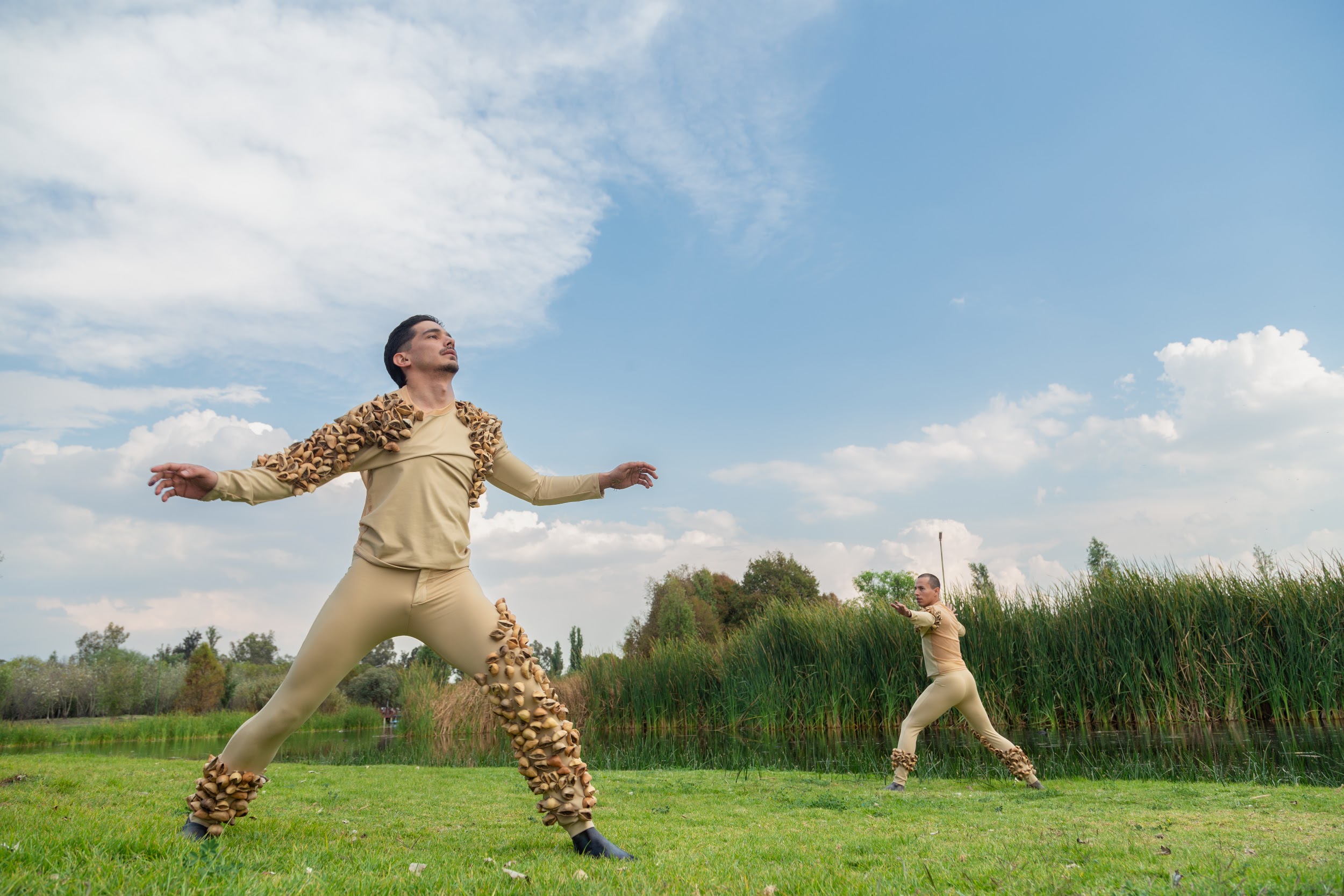
In Seeds, Martha Hincapié Charry activated the landscape of Xochimilco through movement, rhythm, and resonance. Her performativeinstallation used seed-laden garments to compose a sonic choreographythat mirrors the invisible flows of water. Rooted in ancestrallistening and the politics of territory, her gestures—together withperformers Luis Beto Ortega and Ernesto Peart Falcón—remind usthat the body is both archive and conduit, carrying memory,fertility, and resistance. The performance, created in collaborationwith local artisans and ecologists, resituates dance as a ritual ofreconnection with the ecosystem.
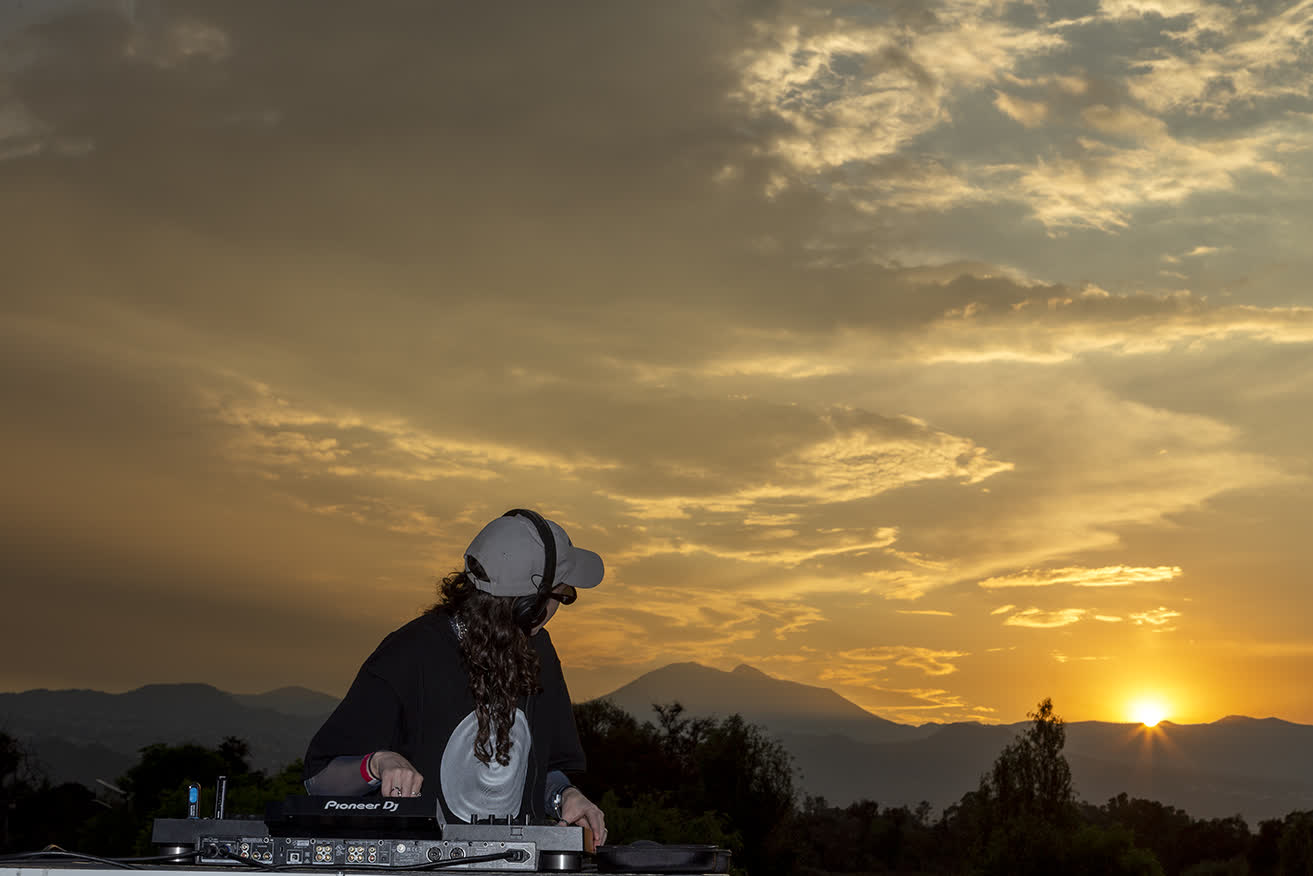
In a sunset performance on the rooftop of Museo Chinampaxochitl,artist and researcher Leslie García invited the audience to attuneto the metabolic rhythms of non-human life. Using bio-sonificationinstruments and analog synthesis, García transformed the electricalsignals of local organisms into a live ambient soundscape. Her sonicmeditation echoed the atmospheric nature of flying rivers—elusiveyet essential—offering a moment of deep ecological listening as thesun disappeared into the wetlands.